Date: Tuesday 2 June 2026 – 15:00 (Europe/London)
Speaker: Ryan Roussel, scientist at SLAC National Accelerator Laborator
Abstract
Machine learning (ML)-based black-box optimization algorithms have demonstrated significant improvements in particle accelerator tuning speed and capabilities. However, deploying these algorithms in real-time facility control remains challenging due to the specialized expertise and infrastructure required. To bridge this gap, we developed the Xopt ecosystem, a versatile suite of tools designed to make advanced ML-based optimization accessible to the broader accelerator community. This ecosystem includes Xopt, a modular Python framework that facilitates the connection of ML-based optimization algorithms with arbitrary control problems, and Badger, a graphical user interface built on top of Xopt, which enables deployment of ML algorithms in real-time control systems. The Xopt ecosystem has been successfully applied towards solving challenging real-time control and accelerator design problems at leading international accelerator facilities, including SLAC, LBNL, Argonne, Fermilab, BNL, DESY, ISIS Neutron Source, and ESRF, demonstrating its effectiveness in real-world optimization tasks. Widespread adoption has also led to contributions from scientists at these facilities, who have added performance and feature enhancements to the Xopt ecosystem, making it a community-driven codebase. In this presentation, we provide an overview of Xopt/Badger capabilities and illustrate its impact through case studies at SLAC accelerator facilities including LCLS, LCLS-II, and FACET-II.
This seminar is now also available on YouTube https://youtu.be/oeTimBBVFrM
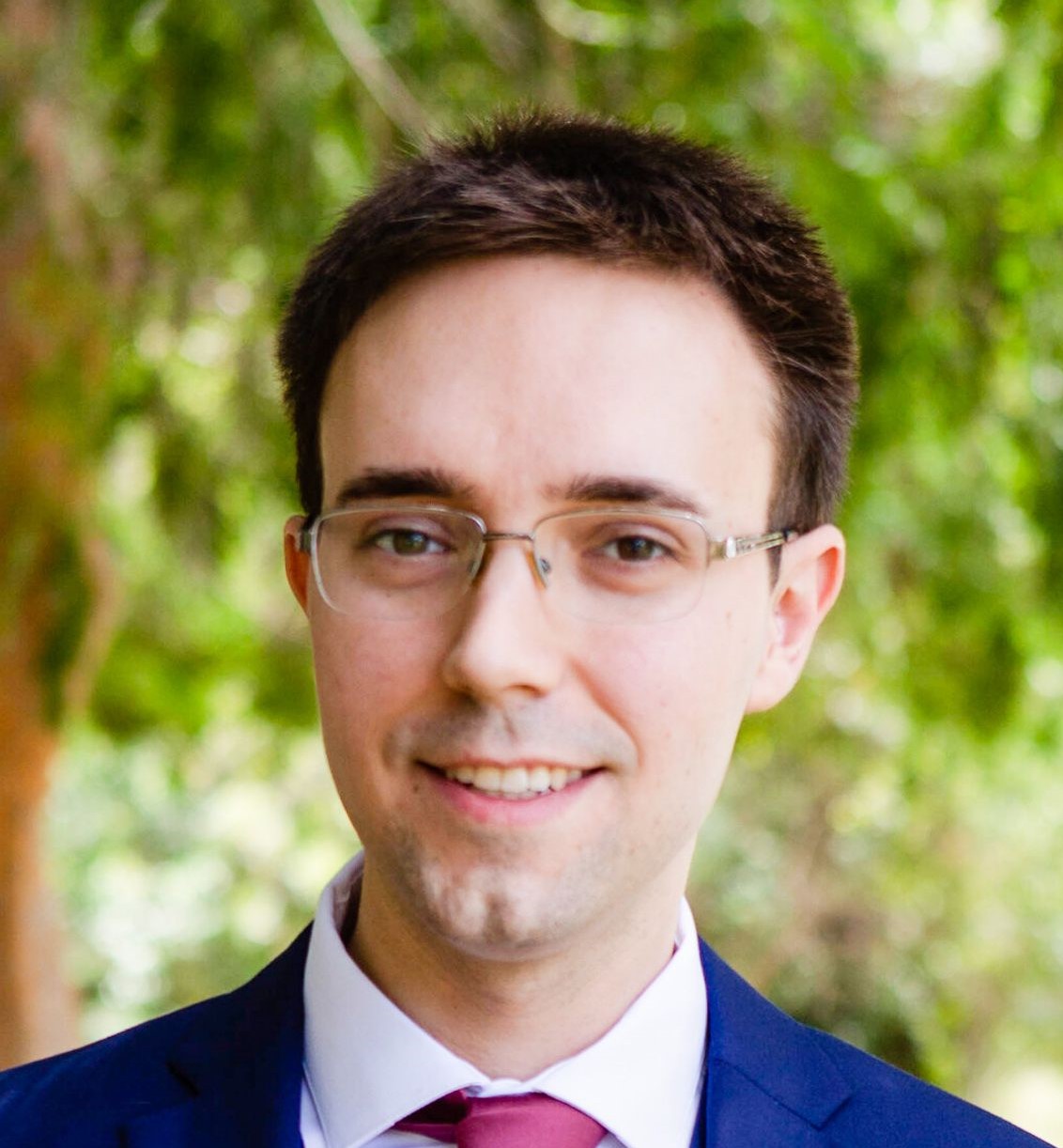
Biography
Ryan Roussel is a staff scientist at SLAC National Accelerator Laboratory. He obtained his PhD from UCLA in 2019 working on high transformer ratio plasma wakefield acceleration. Before joining SLAC as an associate staff scientist he worked at the University of Chicago developing machine learning based optimization algorithms for both simulated and experimental particle accelerators. He currently works on developing machine learning based algorithms for accelerator control and differentiable beam dynamics simulations for physics-informed interpretation of experimental datasets.